
Latest

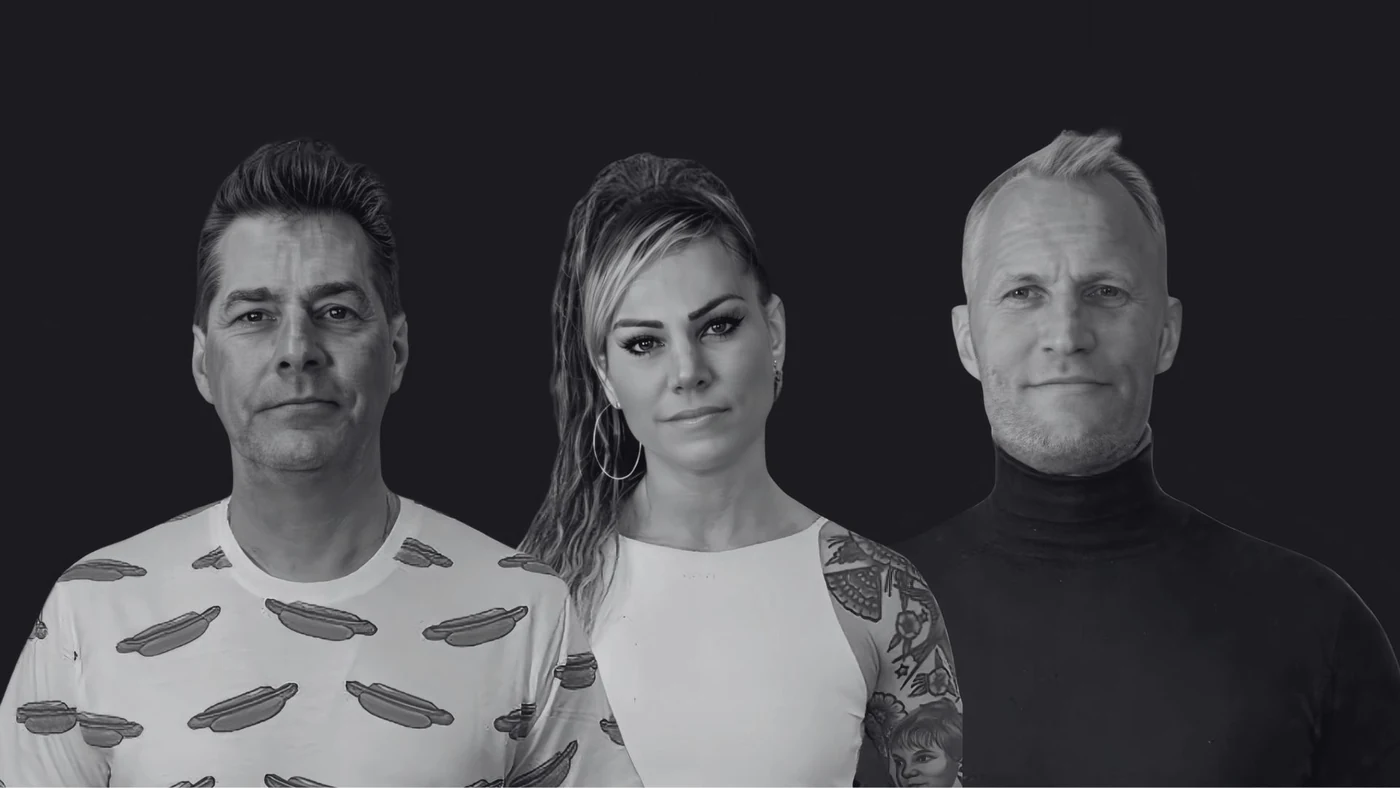
What if you could ask your own?
In the run-up to an election, candidates are everywhere: at campaign events, debates, on social media, in interviews and in advertising. Yet one thing has remained surprisingly unchanged. Most of us hear candidates answer questions that someone else has chosen.
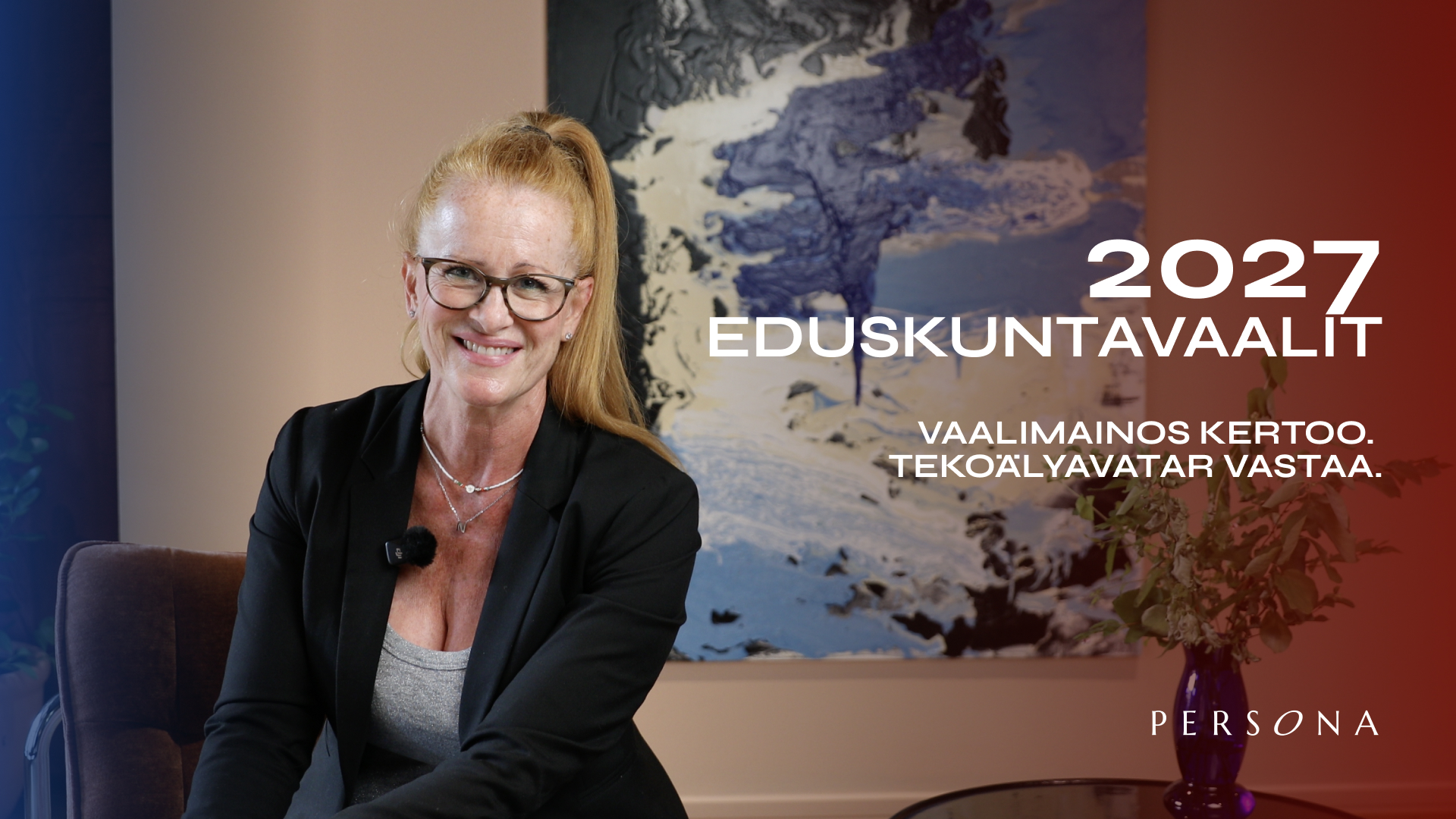
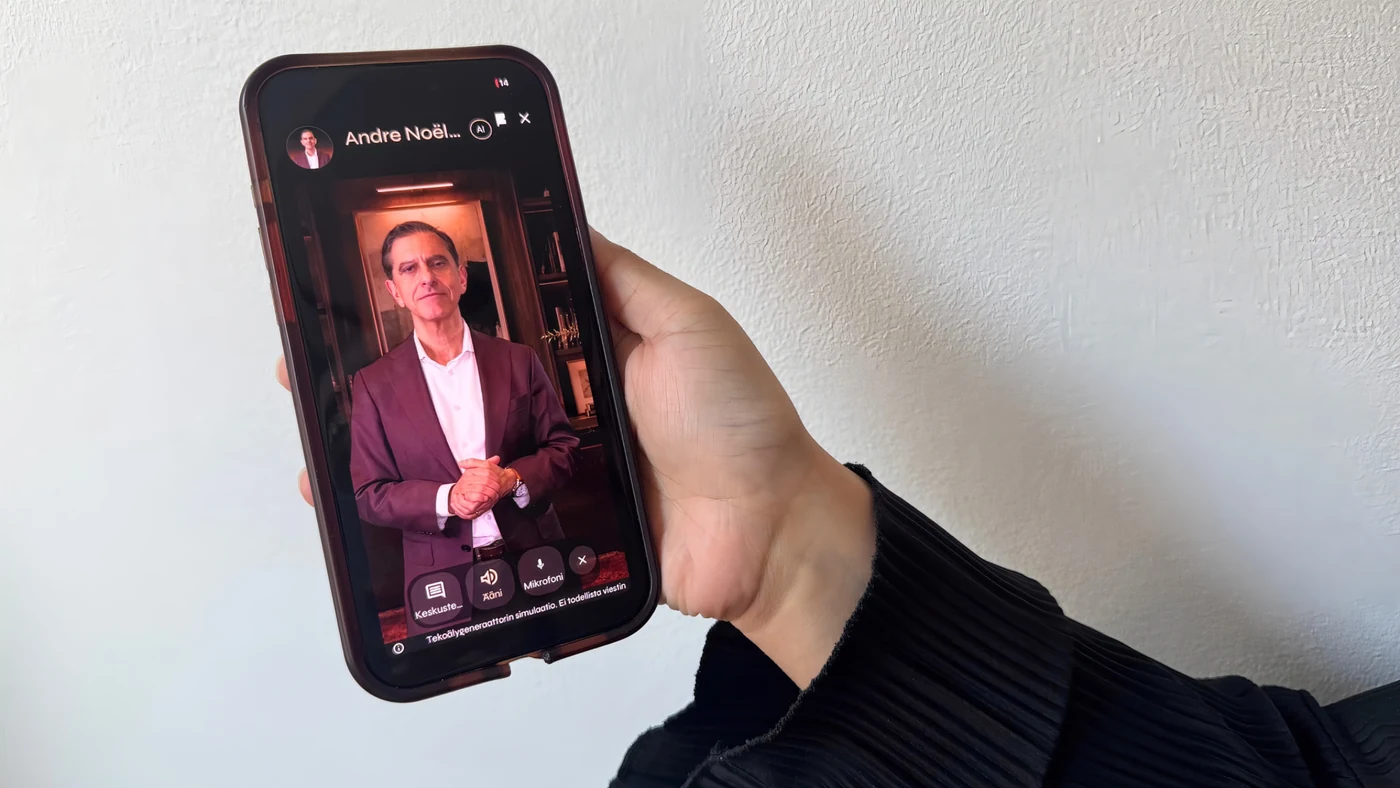
Persona Avatar is bringing AI avatars to Finland's parliamentary elections. Participating candidates will have official AI avatars created in collaboration with them, giving voters the opportunity to have conversations and ask about the issues that matter to their own decisions. This is about more than campaign slogans or pre-written answers. It creates the possibility for longer, more personal conversations.

One voter may care about taxation, another about education, security or healthcare. Someone else wants to know what a candidate would actually do for their city or electoral district. Traditional campaigning makes it difficult to address all of these individual questions: a candidate has limited time, while the same message needs to reach thousands of people.
AI avatars change that dynamic by allowing voters to ask questions, follow up and continue the conversation. One person may want a quick answer, another may want to understand the reasoning behind a position, while someone else wants to know what that position could mean in their own everyday life. Instead of giving everyone the same short campaign message, the conversation can begin with what matters to each individual voter.
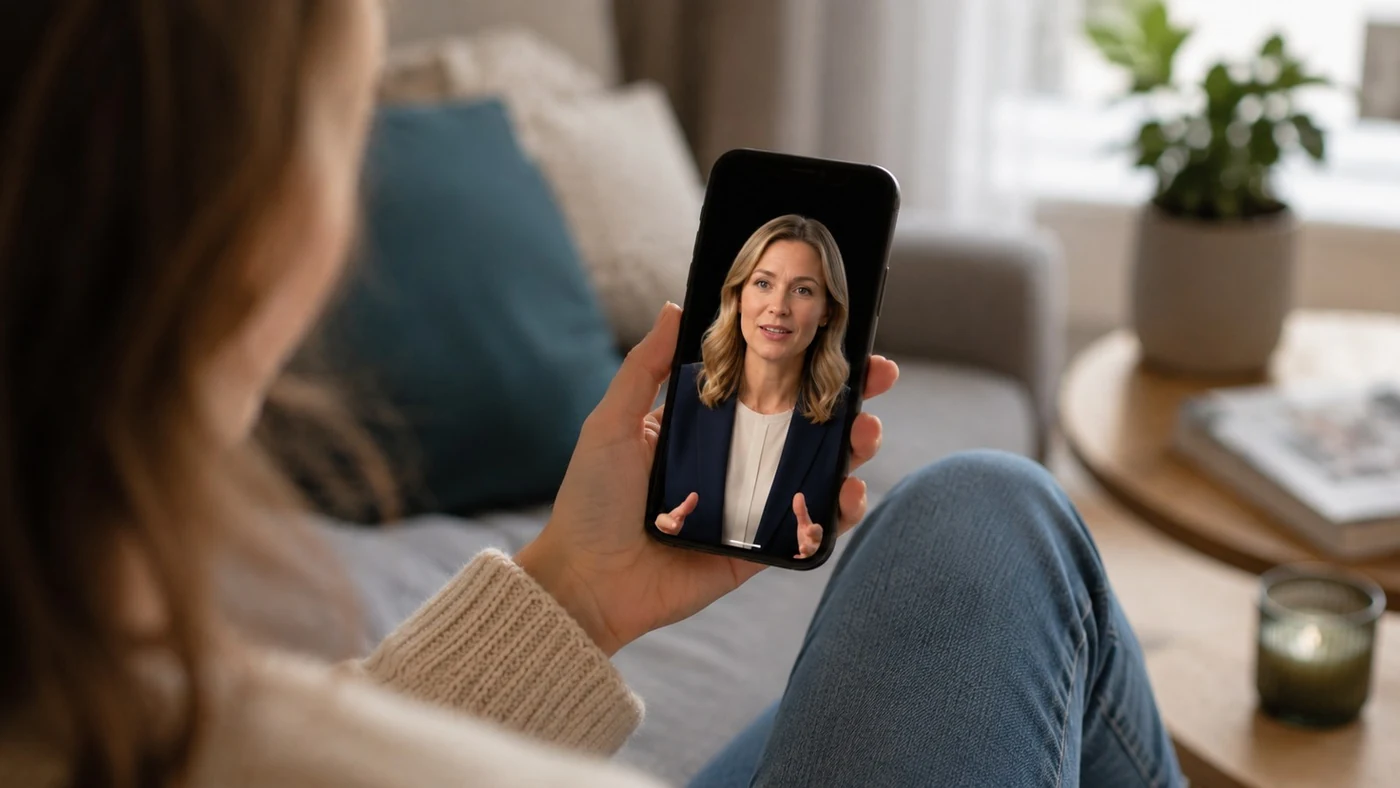
Not everyone can attend an election debate or meet a candidate at a campaign event. And not everyone wants to ask their questions publicly on social media. With an AI avatar, voters can start a conversation when it suits them and ask questions without feeling that they need to phrase them perfectly or already understand the complexities of politics.
You could ask about a candidate's main priorities, their views on education or healthcare, the issues they consider most important in your electoral district, or how their own priorities differ from the broader position of their party. Conversations can take place through text, voice or video and in more than 100 languages, making candidates more accessible to people who may not naturally follow Finnish politics in Finnish.
Face-to-face meetings, election debates, interviews and candidates speaking for themselves remain irreplaceable. An AI avatar adds another way to continue the conversation when the candidate cannot personally be there.
One person cannot have individual conversations with thousands of voters at the same time, but their AI avatar can be available around the clock. This does not make the person behind the avatar less important. It creates more opportunities for voters to understand their views when they have the time and interest to explore them.
In politics, this distinction matters enormously. Persona Avatar's election avatars are not unauthorized copies of candidates or deepfakes. They are created in collaboration with the candidates themselves.
Candidates participate in building their avatars and in defining the information, views and materials their conversations are based on. It is also made clear to users that they are speaking with an AI avatar, not communicating with the real candidate in real time. The purpose of an AI avatar is not to secretly impersonate a candidate, but to create a new way for people to engage with their views.
The use of AI in elections raises legitimate questions. Can a candidate's voice be used without permission? Can someone create a video using their face that they have never approved? Can AI make a politician appear to say something they never actually said?
With deepfake technology, these risks are real. Persona Avatar starts from the opposite principle: an official AI avatar is created with the person's consent and in collaboration with them. Users are clearly told that they are interacting with AI, and the avatar is not designed to blur the line between a real person and artificial intelligence. In elections, trust is not an additional feature. It is the foundation.
People in Finland have very different starting points when it comes to engaging with politics. Not everyone speaks Finnish or Swedish as their first language, political terminology is not familiar to everyone, and some voters only begin exploring candidates shortly before election day.
AI avatars can lower that threshold. With conversations available in more than 100 languages and the ability to ask for an issue to be explained again, more simply or from a different perspective, a candidate's ideas can become understandable to a much broader group of people. Instead of the voter having to adapt to the way a campaign communicates, the conversation can adapt to the voter.
Election campaigns have traditionally been built largely around broadcasting messages: publish an ad, make a video, give an interview, post on social media. The voter receives the message, but meaningful interaction is often brief or missing altogether.
AI avatars introduce another model in which voters can ask questions, challenge ideas, request clarification and explore the reasoning behind an answer. If the first response does not explain something sufficiently, the conversation can continue. This also gives candidates more room to communicate their thinking, because everything does not have to fit into a slogan, an advertisement or a 30-second video.
AI avatars offer another model: one where voters can ask questions, challenge ideas, request clarification and ask for further reasoning.
Their most interesting potential is much simpler: helping people ask more questions before making their own decision.
This could be particularly meaningful for candidates who do not have the largest campaign budgets or constant media exposure. An AI avatar can give a lesser-known candidate another way to be accessible and explain their views to a wider audience. At the same time, voters gain something no traditional campaign advertisement can offer: the opportunity to ask their own question.
In Finland's parliamentary elections, Persona Avatar will bring candidates' official AI avatars directly to voters. The avatars are created in collaboration with the candidates, are clearly identifiable as AI, and are designed to make candidates' views easier to explore and understand.
You can get to know participating candidates, ask about their views and continue the conversation around the issues that matter to you. Perhaps in the elections of the future, the most important question will not only be what a candidate wants to tell you, but what you want to ask them.
You can talk with participating candidates' AI avatars in the Persona Avatar app or on the web. Choose a candidate, ask about the issues that matter to you and continue the conversation at your own pace.
You can also follow @eduskuntavaalit2027 on Instagram, where we'll introduce participating candidates, explore their key themes and share new ways of engaging with elections through AI avatars. The first candidates will be announced in the coming days, with more names to follow as the election approaches.
Meet the candidates. Ask more. Make your own decision.