
Latest · Product news
You look familiar. Is it you or you?
What if people could have a conversation with your stories, knowledge and ideas? Meet Persona for Individuals, our upcoming service for creating and developing your own AI avatar.
What if people could have a conversation with your stories, knowledge and ideas? Meet Persona for Individuals, our upcoming service for creating and developing your own AI avatar.



Can an AI avatar invent political opinions? Can candidates see voters' conversations? What are the answers actually based on?
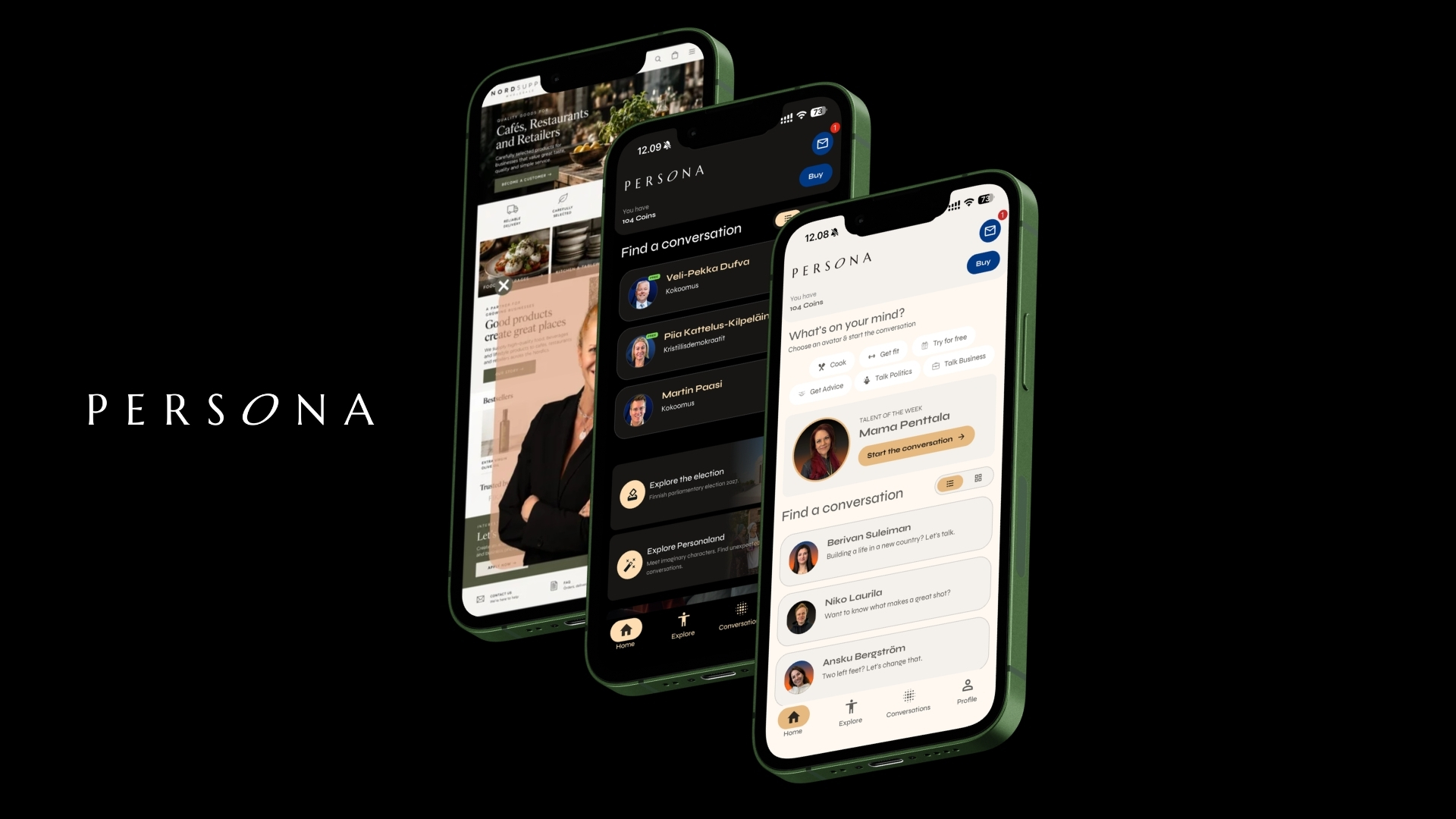
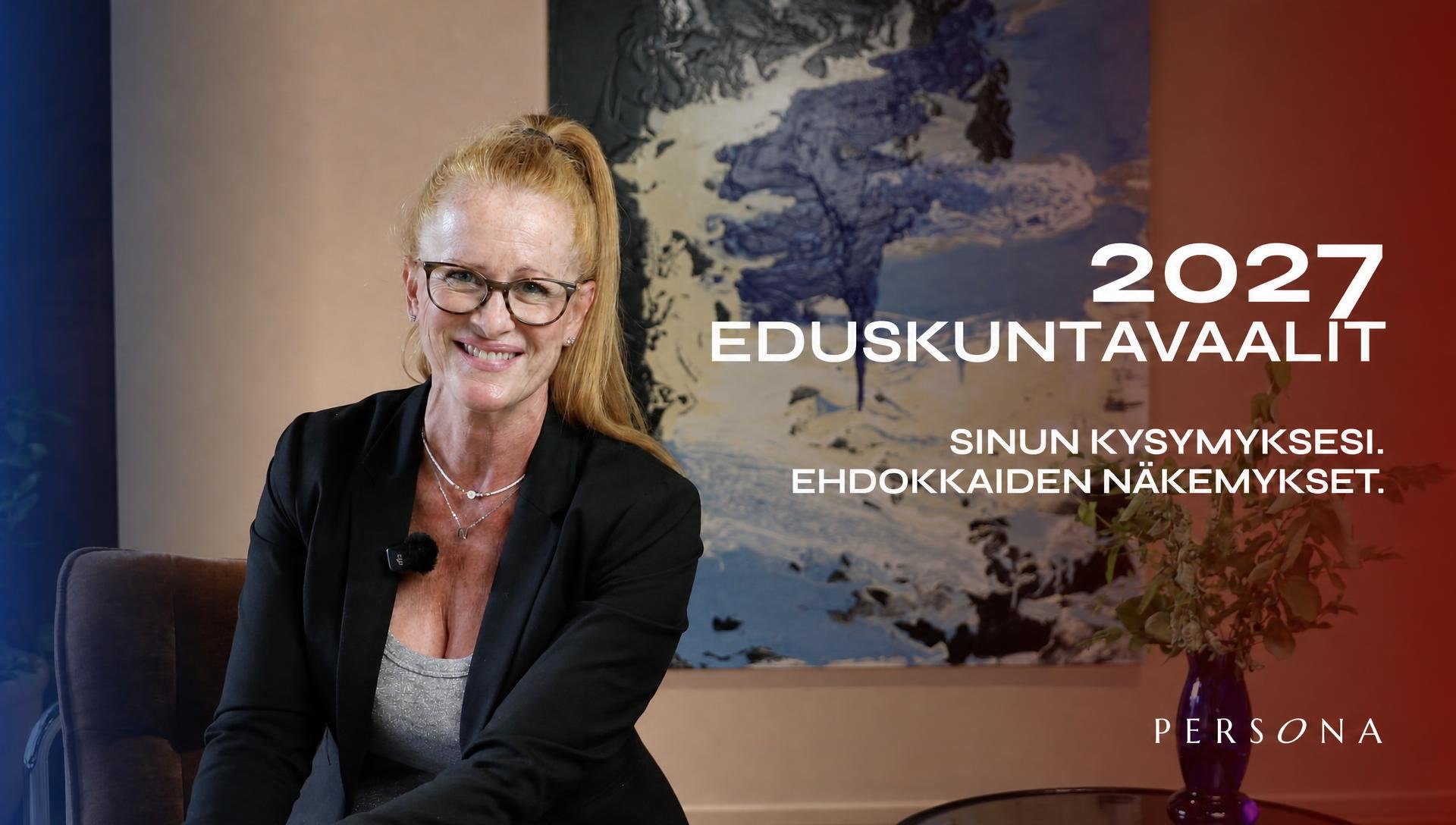
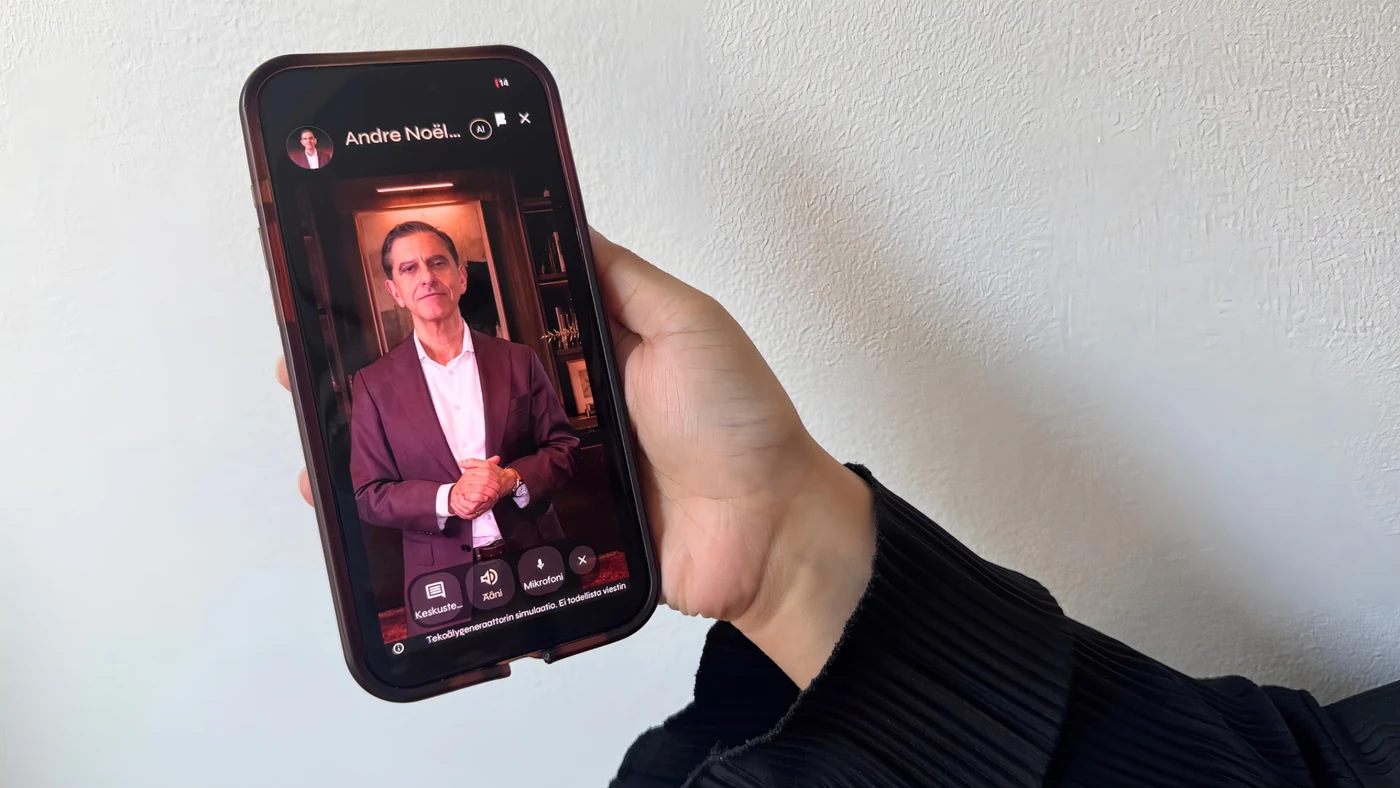
Persona Avatar is a technology platform where you can talk with the official AI avatars of candidates in Finland's 2027 parliamentary elections. Instead of only watching interviews or reading election programmes, voters can ask candidates' official AI avatars about the issues that matter to them.
But new technology also raises questions. And rightly so. Particularly in politics, it is important to understand where AI-generated answers come from, how personal information is handled and who takes responsibility when something goes wrong.
We have received questions about these topics from voters, journalists and others interested in the service. Here are our answers to some of the most frequently asked questions.
Every official election avatar is developed in collaboration with the candidate. The candidate provides and approves the material used as the foundation for the avatar's responses about their political views, positions and personal background.
An AI avatar is therefore not an unauthorised digital representation created by collecting information about a politician from the internet.
However, a language model operates behind the avatar and generates responses during the conversation. This is why it is important to distinguish between the information approved by the candidate and the AI technology used to formulate answers.
This risk cannot be eliminated entirely.
The AI avatar is instructed to discuss the candidate's political positions and personal matters only on the basis of material approved by the candidate. If the information is unavailable, the avatar should explain that the candidate has not expressed a position on the matter.
However, language models can sometimes generate incorrect or invented information. In a test conducted by Finnish newspaper Helsingin Sanomat, an avatar expressed an everyday personal preference that the candidate had not provided.
Based on observations like these, we have expanded the avatars' knowledge bases to include lists of topics on which candidates have not provided information. We also test responses weekly and correct identified errors.
An AI avatar's response should therefore not be treated as infallible or automatically considered an official statement by the candidate.
At present, the avatar does not identify, within each individual response, which parts are based directly on the candidate's approved material and which come from the language model's general knowledge.
Political positions and personal information are intended to come exclusively from the candidate's approved material. The language model generates the wording of the response and may draw on general knowledge.
This distinction matters. An AI avatar is not a direct statement from the candidate, nor is it a real-time conversation with the person.
If you want to verify a candidate's position on an important issue, we recommend checking their official materials as well.
Yes, conversation history can influence how a conversation continues.
Persona Avatar's memory functionality allows the avatar to return to previously discussed topics. For example, if you previously asked about taxation, the avatar may ask whether you would like to continue discussing the subject.
This makes conversations more natural and continuous, without requiring you to explain everything again each time.
Conversation history is not intended to change the candidate's political positions. The avatar should continue to base its representation of the candidate's views on the material approved by that candidate.
No. Candidates do not have access to users' private conversations.
Conversations are stored for the operation of the service and quality control purposes. Access is restricted to designated Persona employees and contracted service providers.
Users may ask personal questions or share their own political views during conversations. This makes responsible data handling and restricted access particularly important.
Conversations are retained until the user account is deleted. Users may also request the deletion of their personal data.
Conversation content may be processed to generate responses and to support the operation and quality control of the service.
User data is not sold or shared for marketing purposes. Users are not required to disclose their political opinions to use the service, and we do not make automated decisions that have significant effects on users.
More information about how personal data is handled is available in our Privacy Policy.
Responsibilities are clearly divided.
The candidate is responsible for the material they have approved. Persona is responsible for the technical implementation, instructions and quality control of the avatar.
If an avatar provides incorrect information, the issue can be addressed and corrected. Candidates can request corrections at any time, and an avatar can be removed from the service immediately if necessary.
This does not mean errors cannot occur. AI technology still has limitations that cannot be completely eliminated.
That is why testing, quality control and responding to identified issues remain essential even after an avatar has been published.
A candidate's AI avatar is based on material provided and approved by that candidate. However, the complete underlying material is not currently published for users to review.
It is important to distinguish between being able to discuss a candidate's positions through an AI avatar and having direct access to the original source material.
We recognise that transparency is particularly important in political communication and understand why voters want to know as precisely as possible how political answers are generated.
Users may wish to record conversations to compare candidates' responses or examine how the technology works.
However, Persona Avatar's Terms of Service restrict the publication of recorded material from the service without separate permission.
If conversation recordings are intended for publication, for example as part of journalistic research, permission should be agreed with Persona in advance.
Researching AI behaviour and critically examining the technology are important. At the same time, the service's terms and questions relating to conversations and personal data must be taken into account.
Not because politicians should be replaced by AI.
Meeting candidates face-to-face, attending election events, watching debates and participating in public discussions remain essential parts of democracy. AI avatars do not replace these experiences, nor are they intended to.
But not everyone can attend campaign events. Not everyone wants to ask questions publicly. And not everyone can find an answer to their particular question in an election programme or interview.
An AI avatar offers another way to explore a candidate's views at your own pace, through text, voice or video, in more than 100 languages.
Your questions. The candidates' views.
When it comes to political AI avatars, the most important thing is not to promise perfect technology. No such technology exists.
What matters is being transparent about how avatars are created, what their answers are based on, how personal information is handled and what happens when errors are identified.
Persona Avatar's official election avatars are developed in collaboration with participating candidates, with their consent and based on material they have approved. The avatars continue to be tested, monitored and improved after publication.
Persona provides the technology. Persona does not create, modify or select the avatars' political views, and does not take a position on parties, candidates or election outcomes.
An AI avatar can help voters explore a candidate's views, but it does not make voting decisions for them.
Ask more. Verify what matters. Make up your own mind.
The parliamentary elections 2027 page shows which candidates' AI avatars you can talk with. On Instagram, @eduskuntavaalit2027 shares information about the service and answers questions.