
Latest · Product news
You look familiar. Is it you or you?
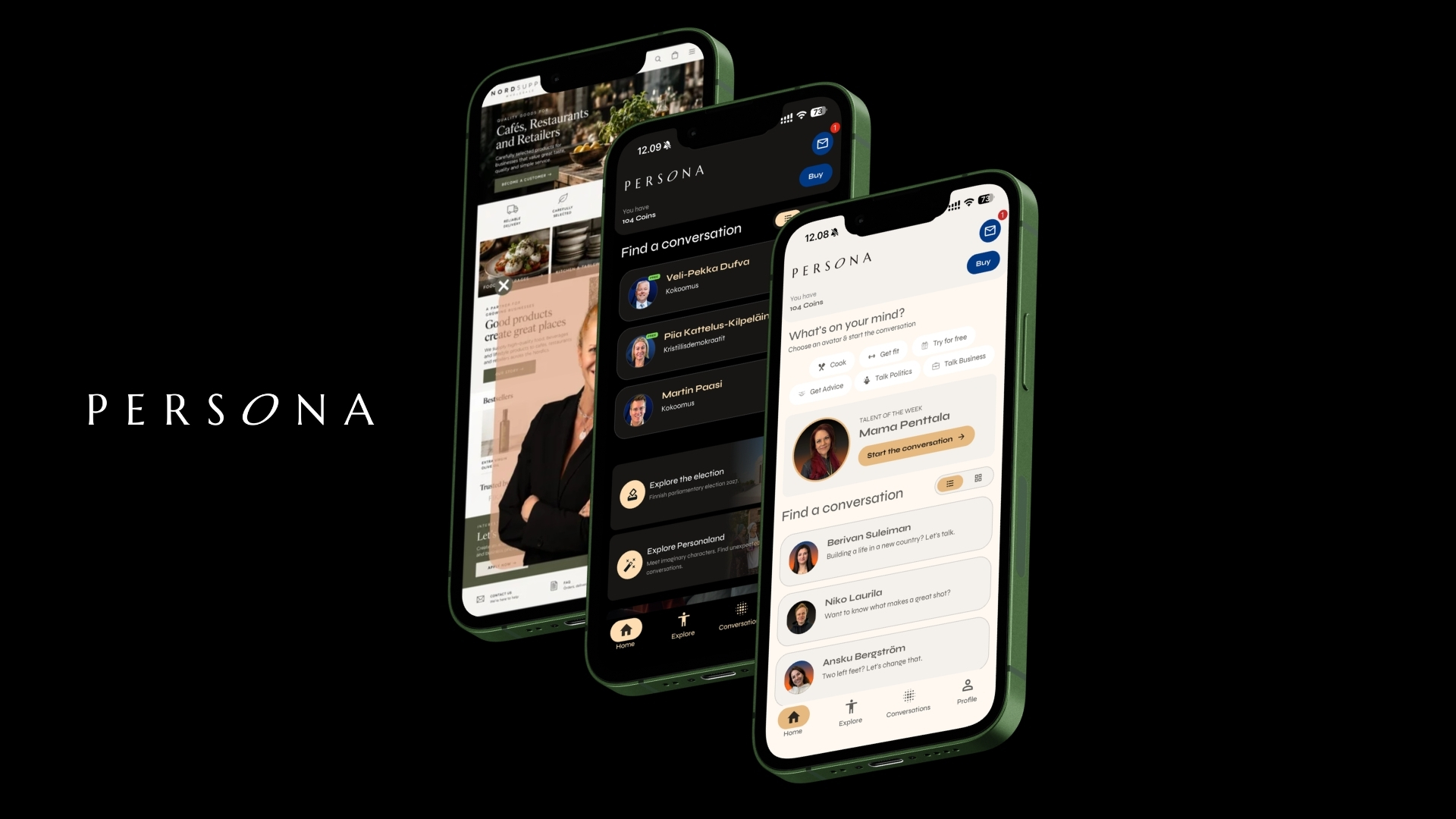
What if people could have a conversation with your stories, knowledge and ideas? Meet Persona for Individuals, our upcoming service for creating and developing your own AI avatar.
What if people could have a conversation with your stories, knowledge and ideas? Meet Persona for Individuals, our upcoming service for creating and developing your own AI avatar.





By Persona Entertainment · · Published by Persona Entertainment Oy
Most websites have a strange expectation: visitors should know where to look before they know what they're looking for. We organise information into menus, categories, product pages and FAQs, then expect people to navigate their way to the right answer. When that becomes too complicated, we add a chatbot. Another little box asking, "How can I help you?" that often sends visitors straight back to the pages they were trying to avoid.
But what if the problem isn't how much information your website has, but how people are expected to find it?
That's the thinking behind Persona for Business, an AI avatar solution that turns a company's website into a conversational experience. Instead of asking visitors to search, scroll and click their way through a website, Persona for Business lets them ask questions directly and receive answers based on the organisation's own knowledge.
Imagine walking into a store and asking whether a product would work for your particular situation. Instead of answering, the salesperson points towards five different aisles and hands you a brochure. That's essentially how many websites still work.
A potential customer arrives with a question. Maybe they want to know whether your service fits their business, how two products compare or what happens after they request a quote. The information might already be somewhere on your website, but finding it requires effort. Every unnecessary step creates another opportunity to leave, turning a seemingly small user experience problem into missed business opportunities.
Your website might have all the right answers. That doesn't mean your visitors will find them.
Traditional website chatbots were supposed to make websites easier to use. Some do, but many have simply introduced a new way to get stuck. You ask a question, receive a generic answer and are directed to an FAQ. You rephrase the question, and the chatbot gives you the same response. Eventually, you close the window or leave the website altogether.
The problem isn't necessarily the idea of conversational technology. It's that too many implementations still behave like automated navigation systems rather than genuinely useful conversations.
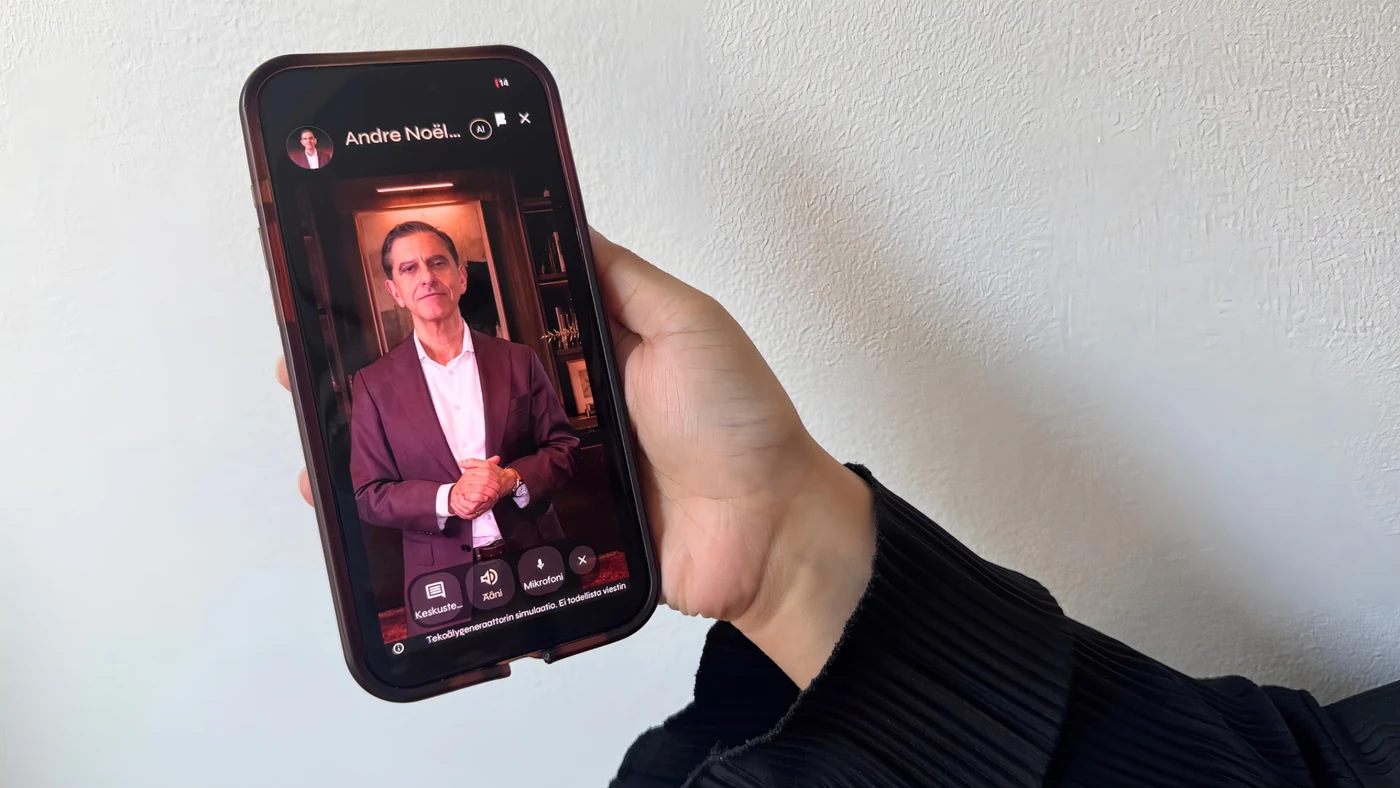
Persona for Business takes a different approach by creating an interactive AI avatar that brings an organisation's knowledge into a natural conversation. Visitors can ask questions in their own words, explore options, request clarification and move towards the information or next step they actually need. Instead of another layer between the customer and the answer, the conversation becomes the way to reach it.
Think about a visitor arriving on a construction company's website looking for a particular solution. Traditionally, they might browse several product categories, download a technical document and eventually submit a contact form just to find out whether a product is suitable. With Persona for Business, they can start by asking: "I'm working on this type of project. Which solution would you recommend?"
The AI avatar can explain relevant options using the company's own information, ask clarifying questions and guide the visitor towards the appropriate product or contact. The same principle works across industries. A wholesale customer can ask about product specifications, a hotel guest can explore services before booking, and a prospective client can find out whether a company's offering fits their needs.
The visitor brings the question. Your business brings the knowledge. Persona makes the conversation possible.
Not every website visitor is ready to buy. Some are comparing options, some are looking for reassurance and others simply need one question answered before taking the next step. Those moments matter, particularly when the alternative is leaving the website without finding what they came for.
Lead generation: A visitor who doesn't understand your offering is unlikely to fill out a contact form. An AI avatar can help them explore their needs, understand available solutions and find the right next step. Where configured, it can also guide them towards an enquiry or lead submission, turning more website interactions into potential business opportunities. Explore lead generation with Persona for Business.
Product guidance: Complex products rarely fit into a neat list of features. Customers want to understand what those features mean for their situation. A conversational AI avatar makes it possible to explore differences, ask follow-up questions and understand the options without reading every product page.
Customer service: Many customer questions don't require a human conversation, but they do require a useful answer. An AI avatar can help with common information requests at any hour, while directing visitors to the appropriate support channel when a question needs human attention. Explore customer service with Persona for Business.
Customer onboarding: New customers shouldn't have to study an entire help centre to understand how to get started. An AI avatar can guide them through processes, explain terminology and help them find the information relevant to their situation.
The opportunity isn't simply to automate more interactions. It's to make those interactions easier and more useful for the people having them.

An AI avatar is only as useful as the information behind it. Persona for Business is built around the organisation's own knowledge: products, services, documentation, processes and other approved materials. The customer decides what information the avatar should use, what it should help visitors with and where the boundaries of the conversation should be.
Persona handles the technical implementation, avatar creation and setup. Before launch, the organisation can review and test the experience, refine its knowledge base and make sure the avatar reflects the business accurately. As products, services and information evolve, the avatar's knowledge can be updated accordingly.
Of course, AI is not infallible. Responses can still be incomplete or incorrect, which is why testing, clear instructions and ongoing quality control matter. A well-designed avatar should recognise when a question falls outside its available information rather than confidently inventing an answer. The goal isn't an AI that claims to know everything, but one that knows your business well enough to be genuinely useful.
Your website doesn't close at five, and neither should access to useful information. Persona for Business makes conversational support available around the clock, including outside business hours and across time zones. With support for more than 100 languages, visitors can explore your products and services in the language they're most comfortable using.
For an international business, that can mean fewer language barriers. For a public-sector organisation, it can mean making information easier to approach. For a growing company, it can mean helping more visitors without expecting the team to be available for every routine question. And unlike a static translation of a website, a conversation allows people to ask follow-up questions whenever something isn't clear.
Persona for Business can also create AI avatars based on real people, such as a company's founder, specialist or spokesperson, through an agreed collaboration and with the person's permission. This brings a recognisable human element to the experience, but it also comes with responsibility. Visitors must understand that they are interacting with AI, not speaking to the real person in real time.
An AI avatar doesn't have to impersonate someone to make a conversation feel more personal. Its value comes from making the organisation's knowledge easier to access, with a clear identity and a more natural way to interact.
For years, websites have become more sophisticated while asking visitors to do essentially the same thing: navigate. We've improved the design, optimised the menus, refined the search functions and added more content. Yet the basic expectation remains that the visitor must figure out where the answer is.
Conversational AI challenges that assumption. It doesn't mean websites will disappear or that every page should be replaced with an AI avatar. Product pages, documentation, visual content and traditional navigation still have their place, but they no longer need to carry the entire responsibility of helping someone find what they need. A conversation can become the starting point instead of the last resort.
For businesses, that changes the role of a website. It becomes more than a digital brochure or an information archive. It becomes an active part of how customers discover, understand and engage with the organisation.
Maybe the future of websites isn't about giving visitors more places to click. It's about giving them a better way to ask.
Persona for Business is an AI-powered conversational website solution developed by Persona Entertainment Oy. It enables businesses and public-sector organisations to create interactive AI avatars that answer visitors' questions using organisation-approved information, support customer service, guide product discovery and help generate leads.
Our journey began with Persona Avatar, a platform where people can have conversations with official, licensed AI avatars of public figures, experts and other personalities. That experience showed us something important: when technology makes conversation possible, people interact with information differently.
Now we're bringing that thinking to businesses and public-sector organisations, making websites more conversational, accessible and useful for the people visiting them.
Your visitors have questions. Let them ask.
Explore Persona for Business, see how its AI avatars work, or try an AI avatar.